


How to Get More Playing Time in Soccer: 9 Proven Tips
Every weekend, thousands of soccer players sit on the bench watching their teammates play the game they love. While some accept this as their fate, others use proven strategies to earn their spot in the starting eleven.
Getting more playing time in soccer is one of the most important parts of improving the key areas of player development, which include: talent, game IQ, athleticism, fitness, recovery, and discipline. Whether you’re just starting your soccer journey or competing in high school soccer, club, academy, college, semi-professional, or the professional level, earning consistent game time helps you develop the exact skills you need to reach higher levels.
For many players and parents who prioritize playing time over being on a top team, having opportunities to play games regularly is often the difference between progress and frustration. If you’re spending a lot of time sitting on the bench, it can be easy to lose confidence, especially at younger ages when everyone wants equal playing time.
There are many reasons why a coach might choose one player over the others, such as a lack of strong fundamental skills needed at that level, low fitness, tactical fit, bad attitude, no commitment, effort in practice, or simply the presence of better players. Some coaches prioritize winning and trust the better or more experienced players, while other coaches may be more focused on development, so they play with younger players.
Regardless of the reason, there are a lot of steps you can take to prove you deserve more playing time.
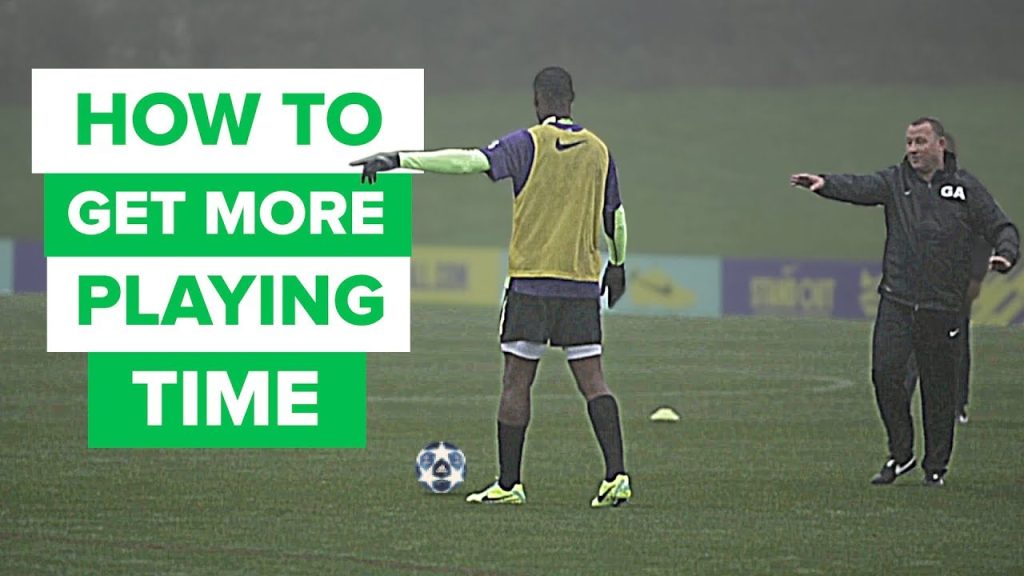
How do you Get More Playing Time in a Competitive Team Environment?
Talk to Your Coach and Find Out Why You Aren’t Getting Playing Time
If you’re spending a lot of time on the bench, it’s important to talk to your coach and figure out why. Instead of complaining, ask for constructive feedback on what you need to improve, and decide if you want to listen to their advice or not.
Understanding what the coach is thinking about your current situation is the first step in building a plan to change that. It is also essential to learn how to respond to this criticism in a constructive manner.
Be Committed and Have a High Work Ethic
If you want to play in league games, you need to prove that you deserve to be on the soccer field. The players who train harder, give 100% in every game, and show effort in every drill are the ones who might get a new opportunity from the coach.
With that being said, working hard is something you should already be doing, since most players say they work hard, but it is even more important to work smarter.
Work Smarter
Working smarter means training the right things that will directly improve the keys of player development. Training is not just about working hard because everyone can work hard; training hard is actually the easy part.
The hard part is actually training in a way that develops your talent to its highest potential, not just mindlessly working hard. This involves taking care of everything you do from the minute you wake up until the minute you fall asleep, such as:
Be Consistent
Being consistent with your training, attitude, and effort can be one of the reasons that separates players who eventually earn playing time from those who stay on the bench. Coaches notice when players show up to trainings and the energy they bring in every single day, whether it’s during practice, games, or even team meetings.
Consistency builds trust with your coach and proves that you’re reliable enough to handle important minutes when the team needs you most.
Have a Positive Attitude and Be Grateful to Be Part of a Team
A good attitude is one of the most important qualities a coach looks for. Even if you’re sitting on the bench, showing frustration or complaining can hurt your chances of earning more playing time.
Be a team player, support your teammates, and show enthusiasm during training. A coach wants players who bring positive energy to the whole team, not just the ones who can play.
Remember, if you’re playing for a great team, sometimes your opportunity will come later in the season. Stay patient and be ready.
Make Your Minutes Count
If you’re only getting a few minutes in a game, make them count. Play aggressively, communicate with your teammates, and show that you belong on the team.
If you’re a striker, take smart shots. If you’re a midfielder, control the tempo and move the ball around. If you’re a defender, be strong and reliable.
The way you perform in limited minutes can determine whether you start the next game or continue being a bench player. Every minute is an opportunity; seize it.
Improve Team Chemistry
Coaches notice when players work well with the whole team. If you connect well with your teammates, understand their movements, and have strong communication, on and off the field, you’ll be seen as a valuable team player.
Good players stand out, but great players help others stand out as well, which involves building team chemistry with everyone in that team, players, coaches, and staff.
Learn Another Position
If you’re struggling to get into the starting lineup, learning a new position can be a game-changer. Some players may only want to play one role, but versatility can make you more useful to a team.
Maybe your current team has too many strikers but needs a winger. Or perhaps the coach told you that you’d get more playing time as a fullback.
Being able to adapt makes you an asset in many teams and increases your chances of getting minutes on the soccer field.
Find Another Team
If you’ve worked hard, shown a good attitude, have been with that team for a long time, and still aren’t getting any opportunities, it might be time to find a different team. Some players stay on a top team even if they’re sitting on the bench, but that’s not always the best decision.
Playing for a “lower-level” team where you get more playing time and opportunities to grow might be better for your overall player development. The key is to find the right balance between competition and game time to keep improving.

Final Thoughts
Getting more playing time in soccer requires a combination of skill development, smart training, and understanding what coaches value most in their players. The key is being proactive about your growth while maintaining a positive attitude, whether you’re earning minutes or working to prove yourself from the bench.
Remember that every player’s journey is different, and sometimes the path to consistent playing time means making difficult decisions about finding the right team environment for your development.
FAQs
How to deal with no playing time in soccer?
If you’re sitting on the bench with no playing time, focus on what you can control by continuing to work hard in practice, train smart on and off the field, maintaining a good attitude, and using that bench time to study the game and learn from other players. Stay patient and make the most of any opportunity you get, but if you’ve been with the same coach for a long time without improvement, consider finding a different team where you might get new opportunities.
What skills should I focus on improving to get more playing time?
The most important skills to focus on improving as a soccer player are, awareness, composure,first touch, passing, dribbling, shooting, and defending because these are fundamental skills that directly impact your performance on the soccer field. It is also very important to work on your weaker foot, speed of play, and composure under pressure, since coaches notice players who can consistently execute the basics while making smart decisions during games.
What equipment do you need to get in shape for soccer?
To get in shape for soccer, players can use a combination of soccer training gear and equipment like agility equipment, cones, and a quality training ball to improve conditioning while working on different soccer skills. You can also add tools like a soccer rebounder, portable goal, or even a ball pump and ball bag to stay prepared and make your training more efficient anywhere.
What are the best soccer recovery options for players?
The best soccer recovery options for players include high-quality soccer recovery equipment, effective injury prevention tools, and structured habits built through following consistent routines, from training routines and daily routines to morning routines that support performance and longevity. It is also important for players to invest in off-field recovery tools and in-game protective gear, such as compression gear, shin guards, supportive footwear like barefoot shoes, extra recovery accessories such as EMF protection for soccer players, and foundational support from soccer supplements to help the body recover, adapt, and stay resilient throughout the season.
