


The 11 Best Soccer Recovery Techniques Worth Your Time
Recovery is just as important as all of the physical and mental training you do when it comes to becoming a better player and getting in better shape. Nowadays, most soccer players have a distorted perception of what real recovery is because there is an overwhelming amount of information available online that makes it challenging to know what is true and what is not.
As a graduate of kinesiology, amateur soccer player, personal trainer, and sports coordinator, I can tell you right now that real recovery is not a random “recovery session” you do once a week. Real recovery comes from improving your tolerance to stress, mitochondrial function, fascial health, aligning circadian rhythms, and being conscious of every action you take from the minute you wake up until the minute you fall asleep.
Recovery is one of the key pillars of player development, along with talent, game IQ, mindset, athleticism, fitness, and discipline, making it very important to treat it as a daily lifestyle practice rather than an afterthought that only gets attention when you are tired, sore, or injured. In this blog post, I will go over the best soccer recovery techniques that are actually worth your time and money as a soccer player, no matter what level you’re currently playing at.
What are the Best Soccer Recovery Techniques for all Players?
Rest Days
One of the most important parts of optimal recovery for all athletes is having at least one full rest day a week, which just as important as your training sessions. Soccer players can’t train with 100% effort every single day of the week because this can lead to burnout and overtraining.
During training sessions you do want to give 100% effort and then after a couple of days of hard training, or after a tough soccer game, your body will likely need a complete day off to recover properly. This will allow your mind and body to reset so that you can go 100% again the following day.
During a rest day you can take the whole day off, spend time doing other techniques on this list, or you can do something light such as going on a walk or any other activity that increase blood flow without being high impact.
Proper Nutrition and Hydration
All players already know that nutrition and hydration are very important for optimal recovery and performance. What most players don’t understand is that proper nutrition for recovery goes beyond just eating enough calories, it’s about timing your meals and prioritizing local, in-season foods grown in your environment.
Make sure you avoid junk food and prioritize organic nutrient dense foods that support your body’s natural recovery processes while reducing inflammation.
High Quality Sleep
After a hard day of training, or even after a successful rest day, the best way to end the day is with 7-8 hours of high-quality sleep. Sleep affects everything from your physical performance to recovery, to your mental clarity, and memory storage, so you want to make sure that you are waking up energized and ready to take on the day.
If you are waking up sleepy and with fatigue then that means you need to learn how to optimize your sleep as a soccer player so that you can actually wake up with energy.
Grounding Therapy
Grounding therapy, also known as earthing, is real, and it is a practice that involves connecting your bare feet to the Earth by walking barefoot on soil, grass, sand, or concrete. Grounding is an effective recovery strategy that has been shown to have several benefits for overall health, reducing inflammation, improving sleep, and increasing energy levels because you are literally absorbing the free energy of Earth in the form of electrons.
Grounding can be done, before, after, and even during a training session, and this is one of those recovery techniques that you cannot overdo.
Hot Therapy
Using heat through hot water baths, saunas, or hot packs is an effective way to relax muscles, repair tissue damage, and promote fresh blood flow after training. Heat therapy helps your body enter a relaxed state that supports natural recovery processes.
You can use hot therapy on its own or alternate it with cold therapy for enhanced benefits depending on your current situation.
Cold Therapy
Cold water immersion, also known as cold thermogenesis, is best performed in natural bodies of water like cold oceans or lakes to combine with grounding therapy benefits. Cold therapy helps reduce inflammation and can accelerate recovery when done properly.
For maximum effectiveness, try alternating between cold and hot therapy using patterns like 2 minutes cold followed by 1 minute hot. If you don’t have access to a natural cold body of water, you can also take ice baths or cold showers.
Red Light Therapy
At a molecular level, red light and infrared light are basically the same thing as heat or thermal energy, such as the heat that comes from a fire, the sun, or your body. However, red light therapy is different because it obviously requires the use of light energy instead of thermal energy.
Red light and infrared are the wavelengths that penetrate deeper into the body than all the other wavelengths and as a result red light can improve blood flow, circulation, mitochondrial function, and it also helps expand the exclusion zone of the water inside your mitochondria.
You can also get plenty of red light from the morning sunlight, which is why it is always recommended to get enough sunlight daily and supplement with red light therapy if you feel you need to.
Massage Therapy
Massage therapy is a great recovery technique that can promote blood flow, improve range of motion, decrease the risk of injury and can actually be used before, during, or after a game or training session. There are different types of massages and the best type of massage you can get is a deep tissue massage from a professional massage therapist.
However, investing your money in a professional massage therapist can get expensive which is why it is best to invest in a reliable massage tool that is cheaper in the long-term, such as a spiky ball, tennis ball, or massage gun. There are other tools like foam rollers, but they are not as effective because of their large surface area.
Whatever massage tool you get, just make sure that it fits easily inside of your soccer bag so that you can take it with you anywhere.
Protect yourself from EMF Exposure
Surrounding yourself with the natural electromagnetic frequencies (NEMFs) of the Earth can be very healing, but just as important is protecting yourself from non-native electromagnetic frequencies (NNEMF), which are manmade. Natural EMFs include the electromagnetic fields produced by trees, Earth’s heartbeat, known as the Schumann Resonance, and even the electromagnetic field produced by the human heart.
On the opposite side, NNEMF includes the radiation from wi-fi, phones, and electronic devices, which have been shown to have negative health effects.
Breath work
Your breath is directly linked with your health and performance. Controlled, intentional, nasal breathing and other specific breathing exercises can improve oxygen and blood flow delivery to your body, which means more nutrients and faster recovery.
For soccer players, consistent breathing techniques can also help improve how you handle stress on and off the pitch.
Epsom Salts
Epsom salts are a great form of passive recovery and they are very easy to use. To use epsom salts simply purchase salts from a reliable brand, fill up a bucket with hot water, pour the salts in and mix until everything is dissolved.
Once everything is dissolved you can put your feet in the bucket and experience a sensation of deep relaxation. You can also take a full body bath with epsom salts, instead of just a foot bath.
The magnesium, a crucial mineral inside of the salts, will get absorbed by your skin helping to alleviate sore muscles, improve circulation, and aid in tissue repair.
Final Thoughts
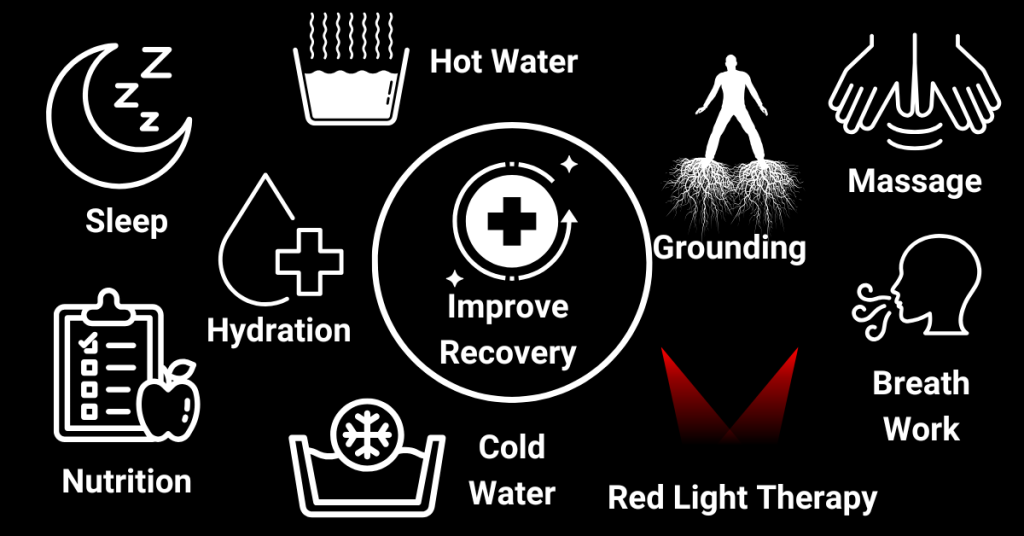
To summarize, using these eleven recovery strategies will help professional soccer players and elite soccer players achieve optimal performance while reducing injury risk and muscle fatigue during the season. Proper recovery is not optional—it’s essential for maintaining physical performance, enhancing recovery between training sessions, and ensuring long term health throughout your soccer career.
Frequently Asked Questions
Why is proper recovery so important in soccer to achieve optimal performance?
Soccer recovery plays a key role in preventing performance deterioration and reducing muscle soreness that can impact subsequent training sessions and technical performance. Without proper recovery strategies, soccer players experience increased injury risk, mental fatigue, and compromised physical performance that affects sprint performance and overall well being during intense exercise and competition.
How do you decrease recovery time in soccer?
To enhance recovery and reduce recovery time, focus on quality sleep, adequate hydration, and consuming high quality protein within a few hours post match to support muscle repair and replenish glycogen stores. Combine active recovery methods like gentle movement and nasal breathing with recovery modalities such as cold therapy and massage therapy to improve blood flow and reduce inflammation.
How do you get rid of muscle soreness in soccer?
Muscle soreness from exercise-induced muscle damage can be reduced through immediate recovery interventions like cold therapy to reduce inflammation, followed by gentle movement to promote blood flow and muscle repair. Professional soccer players should prioritize sleep quality, proper nutrition, and recovery methods like massage therapy or foam rolling to alleviate muscle pain and support the recovery process between training sessions.
What are the best soccer recovery options for players?
The best soccer recovery options for players include high-quality soccer recovery equipment, effective injury prevention tools, and structured habits built through following consistent routines, from training routines and daily routines to morning routines that support performance and longevity. It is also important for players to invest in off-field recovery tools and in-game protective gear, such as compression gear, shin guards, supportive footwear like barefoot shoes, extra recovery accessories such as EMF protection for soccer players, and foundational support from soccer supplements to help the body recover, adapt, and stay resilient throughout the season.
