
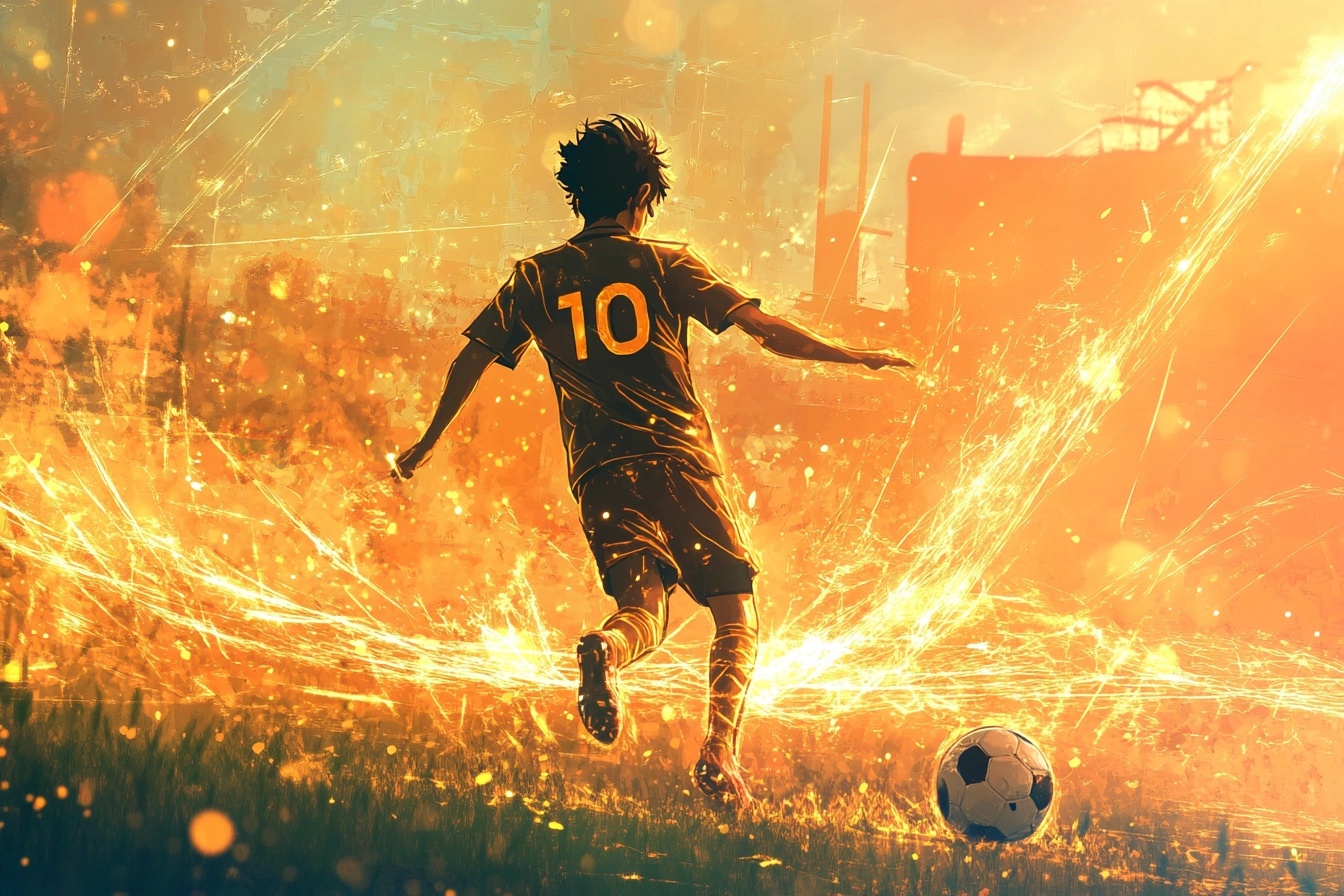

What is the Quiet Eye in Soccer? 9 Must Know Training Tips
“The Quiet Eye” in soccer refers to a player’s ability to focus on key visual cues right before performing any action, such as a first touch, pass, dribble, shot, or defensive move. “The Quiet Eye” was originally identified in basketball free throws and refers to the final fixation on a specific target for at least 100 milliseconds before initiating a skill.
This final fixation is crucial for processing visual information, improving motor control, and maintaining better composure under pressure. During this quiet eye period, the brain stabilizes visual information, reduces unnecessary eye movements, and allows the nervous system to fine-tune the upcoming motor action.
The Quiet Eye technique can strengthen key pillars of player development, including talent, game IQ, athleticism, fitness, mindset, recovery, and discipline. As a soccer player, developing a strong Quiet Eye can make all the difference between a missed opportunity and a game-winning play.
That is why, in this blog post, I’ll cover different ways to improve this essential skill through proven training methods. If you’re interested in taking your training to the next level with a structured program, you can reach out to me or learn more here.
How do you Train the Quiet Eye in Soccer?
“The Quiet Eye” was originally studied in basketball free throws and golf putting, and research shows that athletes with a longer Quiet Eye duration can perform better in certain skills compared to those with a shorter Quiet Eye duration. In soccer, this means players who can hold their gaze steady on the soccer ball or target area, such as the corner of a soccer goal, for longer are usually more accurate, composed, and consistent.
To explain the Quiet Eye more simply: imagine you’re about to take a shot or penalty kick, and right before you do, your gaze fully focuses and fixates on your final target for a few milliseconds. You can then keep that clear image of your target in your head while executing the movement, allowing your brain to maintain precise motor control and block out distractions like crowd noise or goalkeeper movements throughout the entire skill execution.
Now that you have a better general understanding of what the “Quiet Eye” is, let’s talk about tips to improve it.
Improve your Athleticism
One of the fastest ways to improve your quiet eye is by improving your athleticism and breathing mechanics. A stronger, more integrated, fascial-driven body leads to better proprioception, body awareness, and control, making it easier to maintain steady visual focus when it matters most.
When your body feels stable and coordinated, your eyes can lock onto important cues more easily without being thrown off by poor balance or rushed movements, which can help you execute your actions with more precision, confidence, and control.
Perform Mental Training Exercises
Another way to improve your “Quiet Eye” is to practice sports psychology techniques before you step on the field. You can practice techniques such as visualization, meditation, positive self-talk, and training journals to sharpen your mental clarity, build confidence, and train your mind to stay locked on key visual cues even under pressure.
Improve your Central Vision
Central vision, also called foveal vision, is what you use to fixate on a target like the ball or goal during shooting or passing, letting you see small details clearly so you can control the ball and place your shot exactly where you want it. Practice keeping your gaze on a specific target for a few seconds before you move; this helps improve shooting accuracy and decision-making by giving your brain time to process visual information and build a better spatial map of where everything is.
Along with focusing on your target, try to visualize yourself successfully executing that skill in your mind’s eye just seconds before you do it in real life because this mental rehearsal can give you a huge boost in performance.
Improve your Peripheral Vision
Peripheral vision lets you detect movement and track opponents or teammates outside your direct line of sight, which is your central vision. Training this skill helps you keep your eyes on the ball while gathering information about your surroundings, giving you a significant edge over opponents.
The stronger your peripheral awareness, the better you can anticipate plays and position yourself effectively without losing focus on your primary target.
Improve your Dorsal Vision
Dorsal vision connects visual information with body awareness and proprioception, helping you sense your moving body’s position without looking directly at it. Training this skill is crucial for improving coordination and maintaining spatial awareness, allowing you to execute technical skills smoothly while tracking the movements of opponents and teammates around you.
Integrate the Quiet Eye into Technical Drills
The best way to make Quiet Eye a natural part of your game is to consciously practice it during every technical drill, whether you’re working on shooting, passing, or ball control. Before each repetition, make it a habit to lock your gaze on your target for a brief moment, allowing your brain to process the visual information before you execute the skill.
The more you integrate this practice into your training, the more automatic it becomes during actual matches when split-second decisions and precise execution matter most. For example, before shooting, fixate your eyes on the exact spot in the goal where you want the ball to go for at least a few milliseconds before striking it, and when dribbling, focus your gaze on the space or defender you’re about to move past while using your peripheral vision to track the ball at your feet.
Practice Under Pressure
One of the best ways to improve as a soccer player is to train how you play, so practice being comfortable in uncomfortable situations, such as training with noise, distractions, or intense game-like scenarios. By replicating match conditions during training, you’ll learn to maintain your Quiet Eye focus and make better decisions even under pressure.
Use Deceptive Strategies
Soccer is all about fooling defenders with clever moves like fakes, feints, and body positioning. The more you practice deception, the better you get at using your Quiet Eye to spot tiny cues in your opponent’s body language while locking your gaze on where you really want to go. This helps you stay calm and confident when it’s time to pull off the move, making your actions more unpredictable and effective.
Prioritize your Recovery off the Field
Your recovery is as important as the physical and mental training you do on the field because taking care of your body off the field keeps you feeling fresh, focused, and ready to perform at your best. Proper recovery, which includes sleep, nutrition, hydration, EMF exposure, and mitochondrial function, helps your brain process information faster and keeps your reactions sharp during every game, which can have a huge positive effect on your Quiet Eye duration.
Final Thoughts
Developing a strong Quiet Eye is one of the most powerful ways to elevate your performance on the soccer field. By training your ability to focus on critical visual cues before executing any skill, you give your brain the time it needs to process information and stay composed even under high-pressure situations.
Start incorporating these nine training strategies into your routine today, and you’ll notice improvements in your accuracy, decision-making, and overall confidence when it matters most.
FAQs
How does Quiet Eye training improve sports performance?
Quiet Eye training improves sports performance by giving your brain more time to process visual information and fine-tune motor control before executing a skill, leading to better accuracy, consistency, and composure under pressure. This extended visual fixation helps athletes block out distractions, maintain focus on critical cues, and execute movements with greater precision and confidence.
Why do athletes need a longer quiet eye duration?
Athletes need a longer Quiet Eye duration because it gives their brain more time to process visual information, stabilize their gaze, and fine-tune the motor commands needed for precise execution. Research shows that athletes with longer Quiet Eye durations consistently perform better in high-pressure situations, demonstrating greater accuracy, composure, and control compared to those with shorter Quiet Eye durations.
What gear and equipment do I need to improve my soccer skills?
The best thing about soccer is that you don’t need much equipment or accessories to start playing and improving. All you really need is a soccer ball, but the more seriously you want to play, the more gear you will need, such as soccer cleats, shin guards, grip socks, shorts, and shirts, and soccer equipment, such as cones, rebounders, ball pumps, soccer bags, etc.
