


How to Become a Professional Soccer Player in the U.S: 5 Ways
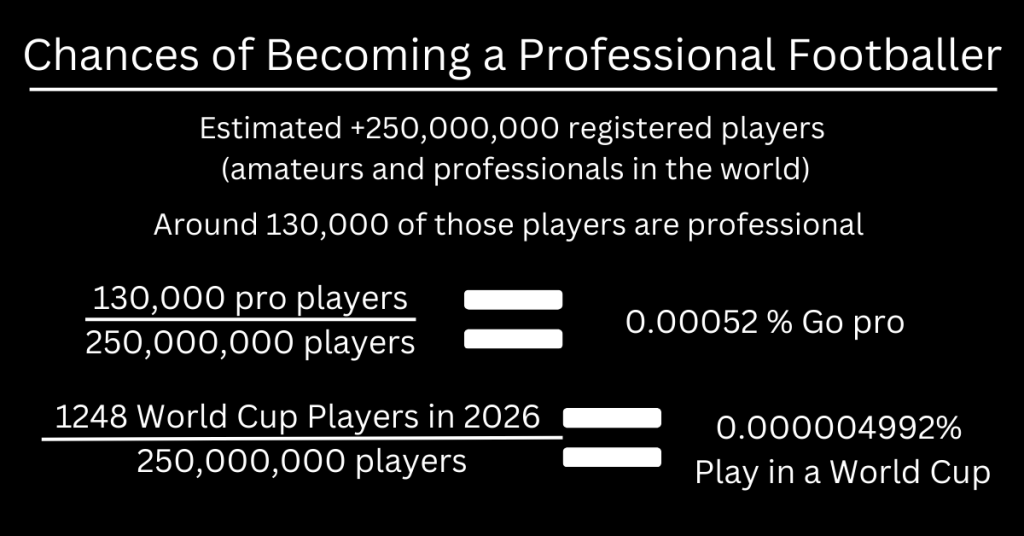
Becoming a professional soccer player is one of the most common dreams that many players around the world share, but it is also one of the hardest to accomplish. The reality of professional soccer is that only about 0.1% of all players make it pro, and even a smaller percentage play at the highest level that we see on TV, such as the UEFA Champions League and the World Cup.
In the United States, it is even harder to become a professional soccer player because the first division league in the country works under a closed system, which means there is no promotion or relegation between professional and semi-professional leagues. This eliminates lower league teams because they have no pathway to move up to Major League Soccer, or even the USL Championship, which is the second tier of professional U.S soccer, based on their performance.
While becoming a professional soccer player is one of the hardest jobs in the world to get, it is entirely possible if you’re willing to train with purpose consistently over a long period of time to improve the keys of player development: talent, game IQ, mindset, athleticism, fitness, recovery, and discipline. To watch the best video on how to actually go pro in soccer, this is by far the best one by Joe Funicello, who is an ex-professional soccer player and founder of SoccerViza.
As a player from the United States, I’ve played at various levels of the U.S soccer pyramid, from college to UPSL and SWPL, but I have not played professional soccer. I am still an amateur player, which is why when it comes to this topic, it is best to learn from someone who has actually done it, but I am also now a coach, trainer, and sports coordinator, and have been involved with the beautiful game basically my entire life.

How do you Become a Pro Soccer Player if You’re from the United States?
To summarize the video above, Joe Funicello breaks down the real journey behind becoming a professional soccer player, not the version shown on social media or by influencers, but the one that most starting professional players actually experience. He explains that going pro isn’t only about talent and training hard because these are things all serious players should already be doing, no questions asked, such as:
- Developing a real passion and love for the game
- Training with the highest level team possible consistently (2-4 times a week)
- Playing a lot of small sided games, pickup games, futsal and other variations of the game (2-4 times a week)
- Developing your unique talent that helps you stand out
- Understanding the game
- Developing an elite Mindset
- Developing elite athleticism and fitness by improving your cardiovascular, fascia, and nervous systems
- Optimizing your sleep, nutrition, hydration, supplementation, EMF exposure, and overall recovery
However, even if you do all of these things and more, that still doesn’t guarantee you’ll make it as a professional soccer player, especially if you’re from the United States. What Joe Funicello emphasizes is that the process requires much more than simply training hard and performing well locally.
You need to understand how the global soccer industry works, where opportunities actually exist, what countries you can play in, what leagues you can play in, what your current level is, and what sacrifices you’ll have to make along the way. Most players from the U.S, except the top 1% of players that get signed through the different ways I’ll explain next, will have to move abroad, start at the bottom in smaller leagues, often earning little to no money, and live in unfamiliar environments to kickstart their dreams.
While the journey to becoming a professional player is different for everyone, there are still several legitimate pathways to go pro in the United States, although this will make up an even smaller percentage of players.
Be Talented Enough to Get Signed by a Professional Team
The simplest way to become a professional soccer player, but also the hardest is to be talented enough to get signed directly by a professional team through your skills, consistency, and standout performances in competitive matches. Players develop their talent at different rates which is why doing the right things from a young age and over a long period of time, such as improving your talent, game IQ, mindset, athleticism, fitness, and recovery habits, can increase your chances of being noticed by scouts and professional clubs.
Join a Professional Youth Academy
If you’re a talented youth player, joining a professional youth academy can help you get into the professional game, especially if you’re one of the best and most consistent players there. These academies provide access to top-tier coaching, competitive matches, and consistent physical and mental training designed to prepare young athletes for the demands of professional soccer, but just because you’re in an academy doesn’t guarantee success; you still need to stand out every day through effort, attitude, and continuous improvement.
Play College Soccer
College soccer provides one of the most direct pathways for American players to gain exposure while continuing their education and athletic development, but only for the small percentage of elite college players that get accepted into the MLS Superdraft. The truth is college soccer is a vehicle to allow student-athletes to get an education while playing the sport they love, but it’s not really a vehicle into the professional game except if you’re in that top 1% at that time.
Attend Lower- League Club Tryouts, Combines, and Showcases
Joining a lower-league club, becoming the best player in that team and in the league, or attending combines and showcases can open the door to becoming a professional soccer player because it gives you exposure and allows you to build a name for yourself. Although this is very rare in the United States because of the closed systems, the very best players who perform well, display professionalism, and show consistency in lower leagues occasionally have the chance to compete at a higher level, such as Yan Diomande.
Move Abroad
If you’re in the large percent of players that does not fall into any of the categories above, or you already missed your chance because of age or limited opportunities in the U.S., moving abroad can be the best decision you’ll ever make for your soccer career. Many American players have gone overseas to start in lower divisions, earn valuable experience, and work their way up, proving that dedication, adaptability, and taking risks can open up doors that don’t exist in the closed U.S. soccer system.
Final Thoughts
Becoming a professional soccer player from the United States is an incredibly challenging journey, but not an impossible one for those who commit 100%. The truth is, talent alone isn’t enough, you need discipline, perseverance, and a deep love for the game to push through the setbacks that every aspiring player experiences.
Whether you’re training with a local club, playing college soccer, or chasing your dream abroad, focus on continuous growth both on and off the field. The players who make it are not always the most talented but the most consistent, humble, and hungry to learn every single day, they have a plan, and do not quit.
Frequently Asked Questions
Is it hard to become a professional soccer player?
Yes, becoming a professional soccer player is extremely difficult because the competition is global and the margins for success are incredibly small. Only a tiny fraction of players ever make it to the professional level, which requires not just talent, but years of disciplined training, mental resilience, and the ability to perform consistently under pressure in high competitive environments.
How much do pro soccer players get paid?
Professional soccer player salaries vary widely depending on the country, league, and level of play. Top players in professional leagues like the Premier League or MLS can earn millions per year, while players in lower divisions often earn decent wages, get paid housing, or other benefits, or might even have to work a second job depending on the contract.
What gear and equipment are needed to improve my soccer skills?
The best thing about soccer is that you don’t need a lot of equipment and accessories to start playing and improving. All you really need is a soccer ball, but the more serious you want to play, the more gear you will need, such as soccer cleats, shin guards, socks, shorts, and shirts, and soccer equipment, such as cones, rebounders, ball pumps, soccer bags, etc.
