


Are Private Soccer Lessons Worth It? The Truth
When it comes to soccer training, you have many options, from unstructured play and pickup games to team training with a school or club team, academy teams, or even private soccer lessons. To see faster results, your overall training should strengthen the pillars of player development: talent, game IQ, mindset, athleticism, fitness, recovery, and discipline.
To get the most out of these training options, players should prioritize team training and getting minutes in real games, while supplementing with private, solo, or partner training sessions during the week, or even better, small-sided leagues. This approach ensures you develop your skills in realistic environments while still targeting specific areas for improvement outside of team play.
If you are already in a team environment and want extra training, private training can help, but if you are a complete beginner, it’s better to join a team or league to get valuable playing time and consider private training later. If you’re a beginner and want to start with private training, it’s smart to find another team or league to play in as soon as possible.
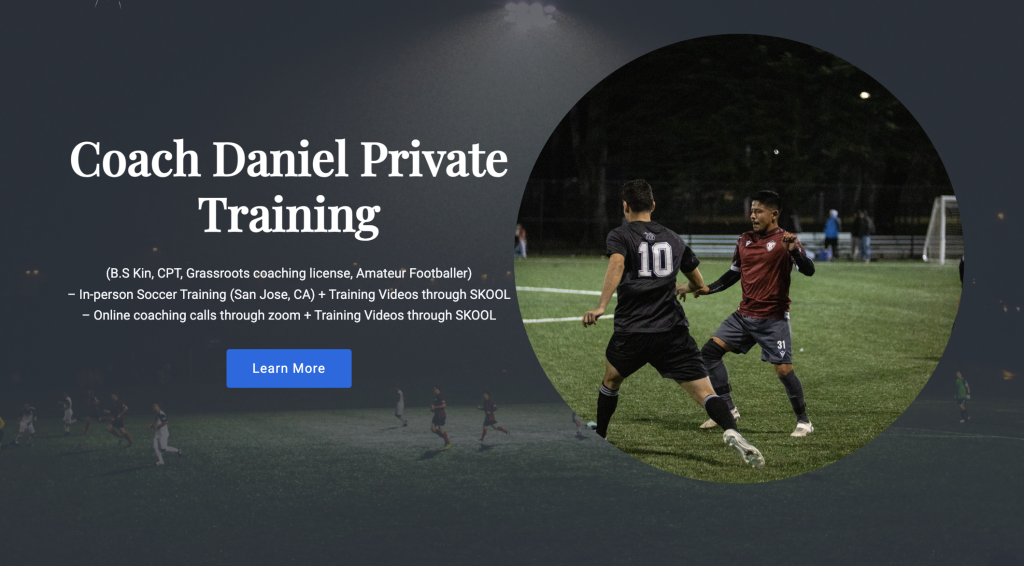
In this blog post, I will discuss the pros and cons of private training, how to find a good trainer, prices, alternatives, and more. If you’re interested in taking your training to the next level with a structured program, you can reach out to me or learn more here.
Pros of Private Soccer Coaching
Private soccer training is usually a 1-on-1 session between a player and a soccer coach that lasts anywhere from 45-90 minutes. Many private trainers also offer small group training, which usually consists of 2-4 players.
Here are the main pros of signing up for private soccer training lessons.
Individualized attention:
One of the main benefits of private soccer lessons is the individualized attention players get. By training one player at a time, coaches can personalize sessions to address that player’s specific weaknesses and strengths.
Private sessions also allow for more 1-on-1 time with a coach, especially more than the players get during their team training, which is usually a team of around 20+ players with one to three coaches in total. Making the coach-to-player ratio something like one coach for every eleven players.
Faster Development:
Private training sessions can help players see faster progress because they get valuable 1-on-1 time with a coach. With a coach, you not only get the training session, but you can also ask questions and learn from their experiences as a player or coach.
Learning from your own experiences is one of the best ways to learn anything, but learning from the experiences of others, such as your coaches, can help you save valuable time in your journey, which can lead to faster development.
Flexible Scheduling:
Private soccer training can also be more flexible and convenient for soccer parents, usually much more than club team practices, making it a great way to get extra training in. With private training, you can often choose times that fit your family’s busy schedule, allowing players to balance school, other activities, and soccer without feeling overwhelmed.
Unlike fixed team practice schedules, private sessions can be arranged on weekdays, weekends, or even during school holidays to maximize convenience for both the player and the coach.
Receive other forms of training:
Some private trainers focus not only on improving soccer-specific skills such as ball control, first touch, passing, dribbling, shooting, defending, decision-making, composure, awareness, and creativity, but also on other performance-related aspects of the game to speed up results.
For example, with my private soccer training program, I educate my players on how most players think that “training” is only the work you put in on the field, but the truth is that everything you do on and off the field, from the minute you wake up until the minute you go back to sleep, impacts your performance one way or another. This includes the following topics:
- Football Training – tactical and technical skills
- Mindset training
- Athletic Training
- Injury Prevention
- Recovery
Cons of Private Soccer Coaching
Although private soccer training offers many benefits, as a private soccer coach, I also see negatives parents and players should know about.
Cost
Private soccer lessons can be more expensive than other training options, such as team training or group sessions, because of the flexibility and individualization a player gets with a coach, which will not happen during most team environments with a coach-to-player ratio of around 1-to-11.
Social Interaction:
Private training can’t fully replicate the social elements of soccer, such as being part of a team, interacting with coaches, building camaraderie, and experiencing the collective highs and lows, all of which are essential for player development.
Intensity and Competition:
Compared to individual training, team training often provides higher intensity and more competition, since more players are involved, which can raise the level and vary the types of drills.
Limited Game Simulations:
Private soccer lessons can sharpen individual skills and prepare players for team training and games, but they lack the unpredictability of a real soccer match. That is why private lessons shouldn’t be a priority; they should be supplemental training.
The priority should be playing with the best team in your area, training with that team consistently every week, and, on days off, finding other ways to get touches on the soccer ball, such as playing different variations of the game. Team play and pickup games offer a more realistic simulation of match scenarios, but finding high-quality pickup games may be tough in some areas, depending on your age and skill level, which is where private training comes in.
Are Private Lessons with a Soccer Coach Right for You?
Now that you understand the pros and cons, the real question is whether private soccer training aligns with your goals, current environment, and budget. If you’re already training consistently with a team, competing regularly, and looking for personalized coaching to accelerate specific areas of your game, then private lessons can be a valuable supplement to help you progress faster.
However, if you’re just starting out or not yet part of a regular team environment, your priority should be gaining real match experience, developing chemistry with teammates, and learning the tactical and competitive aspects of the game before investing in 1-on-1 coaching. Ultimately, private training is most effective when it complements, not replaces, team play, unstructured games, and consistent game time.
With that being said, if you’re a beginner, you’re already playing with a team, or you’re an experienced player looking to sharpen specific skills, private soccer training can be a great option, especially when you have clear goals, the financial ability to invest, and a coach who aligns with your needs and development path.
Final Thoughts
To summarize, the decision to invest in private soccer training depends on an individual’s needs and circumstances, as well as the pros and cons of private training. Make sure you do some research about the trainer you want to work with, and remember that money is different for everyone, so if a trainer’s program makes sense to you, you’ve spoken to them, and it looks like a good fit, then go ahead and try it out.
Frequently Asked Questions
How do you find the right private soccer coach, and how much should you expect to pay?
When choosing a private soccer coach, ask the right questions since you’ll be investing time, money, and energy in their program. Look into their playing and coaching background, the results and testimonials they can provide, the type of players they specialize in, and what their program actually includes to make sure it aligns with your goals and is both effective and safe.
Pricing for private soccer training varies by coach and location, but sessions typically range from $40 to $80, with some as low as $30 or as high as $200. More important than price, though, is whether the program fits your needs and delivers value, since real results usually require consistent training over time rather than a few random sessions.
What are the alternatives to private soccer training for faster improvement?
- Get in a team environment- school, club, academy, or college soccer team
- Train 2-3 times a week and consistently
- Play games on the weekend
- Get Feedback from coaches and ask them questions
- Small group training
- Train with or without a coach and 1-2 other people
- Unstructured Play
- Pickup games
- Small-sided games
- Futsal
- Beach soccer
- Any other variation of the game
- Individual soccer training
- Barefoot soccer training
- A lot of the best players in the world developed their skills by playing barefoot
- Wall training
- Find a wall that you can use as a rebounder, which acts as a training partner that never gets tired
- Maximal intent training
- Practice basic skills of the game such as passing, dribbling, shooting, and juggling at game speed and with maximum effort and focus
- Barefoot soccer training
What gear and equipment are needed to improve my soccer skills?
The best thing about soccer is that you don’t need much equipment or accessories to start playing and improving. All you really need is a soccer ball, but the more seriously you want to play, the more gear you will need, such as soccer cleats, shin guards, grip socks, shorts, and shirts, and soccer equipment, such as cones, rebounders, ball pumps, soccer bags, etc.
