

7 Tips on How to Defend in Soccer
Defending is one of the most important and underrated skills in soccer, and every player must improve it no matter their level or position. In soccer, some positions are more defensive, but even attacking positions must defend, press, and help the team regain possession of the ball when they lose it
Good defending is not just about physicality or aggression because it also requires intelligence, positioning, and the discipline to consistently make the right decisions under pressure. The key principles of good defending can be summarized into the following although of course, there is a lot more to it: moving from high to low as you approach the attacker, from fast to slow as you close down, and staying side on and not flat-footed.
In this post, I’ll go over 7 tips for defending in soccer so you can become a more effective, disciplined, and intelligent defender in real game situations. If you want to take your training to the next level with a structured program, reach out to me or learn more here.
How do you defend in soccer?
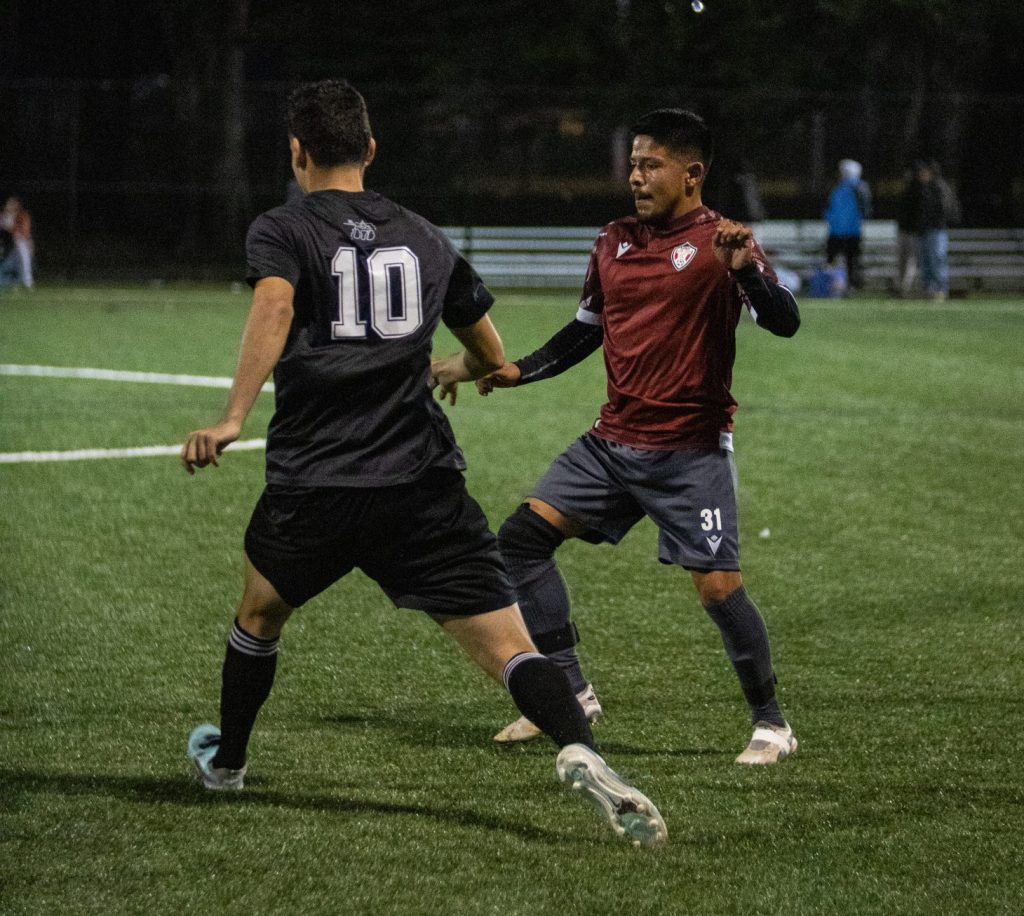
Good defending starts with understanding that your primary job is to deny the attacker time and space, prevent them from playing forward, and ultimately stop the opposition from scoring. It is one of the most fundamental skills in the game, and every player needs to master it alongside ball control, first touch, passing, dribbling, shooting, awareness, decision-making, composure, and creativity.
All of these skills develop faster when you are also consistently working on the key pillars of player development: talent, game IQ, mindset, athleticism, fitness, recovery, and discipline, because becoming a better defender requires developing your whole game, not just your ability to tackle or win physical duels.
Approach
When you approach a player with the ball at their feet, move quickly and aggressively with big strides, then transition to shorter, more controlled steps as you close in. Remember to stay on your toes, stay calm, keep your eyes on the ball, not their feet, and do not get caught flat-footed.
Stay Low and Balanced
Staying low and balanced while defending is one of the most important physical habits you can develop, because a low center of gravity gives you better lateral movement, quicker recovery steps, and faster changes of direction. Keep your knees bent, your feet wider than shoulder-width, and your weight on the balls of your feet so that you can move in any direction instantly.
Control / Contain
Once you have approached and found your balance, the next step is to control and contain the attacker by jockeying and forcing them into a situation with limited options. Be patient, stay side-on, keep the right distance so you can reach the attacker with a slight lean forward, shuffle your feet with the attacker’s movement, and wait for the right moment to poke the ball away with your leading foot.
Force the Attacker to One Side
When defending, whether you’re jockeying or not, it’s important to force the attacker to one side, ideally their weaker side. To do this, identify the opponent’s weak foot by watching them throughout the match if you don’t already know it.
Use the angle of your approach and your body shape to funnel the attacker where you want them to go. Once you have forced them onto their weaker foot or toward the sideline, stay there and don’t let them cut back inside.
Time your Tackles
Timing is everything in defending, and you should only use a slide tackle if you absolutely have to, since it can lead to fouls and attempts on goal for the other team. The key is to be patient and wait for the right moment, which is usually the split second when the attacker takes a heavy touch or shifts their weight in one direction.
Keep Your Eyes on the Ball and the Player
One of the most common mistakes defenders make is focusing only on the ball or only on the player’s feet; in reality, you need to track both simultaneously to read what the attacker is about to do before they do it. Focus on the ball, but also stay aware of the attacker’s body shape, hips, and movement, because the hips never lie and will almost always tell you which direction the attacker is about to move before their feet do.
Types of tackles
Knowing which type of tackle to use and when is one of the most important parts of defending, because using the wrong technique at the wrong moment can result in losing possession, committing a foul, or getting completely beaten by the attacker. The most common types of tackles are the poke tackle, which is used to quickly jab the ball away with your leading foot while staying balanced; the block tackle, which is used when you are close enough to put your foot through the ball and win it cleanly; and the sliding tackle, which should only be used as a last resort when you have no other option.
Final Thoughts
Becoming a better defender comes down to consistently working on the 7 habits above and developing the intelligence, patience, and discipline to apply them in real game situations under pressure. The best defenders in the world are not always the fastest or the strongest, although that can be important, but they are the ones who make an impact when it matters most by approaching correctly, staying low and balanced, controlling the situation, and making smart decisions at the right moment.
Stay patient, trust the process, and remember that good defending is one of the most valuable things you can contribute to your team, because a player who can reliably stop plays and win possession cleanly will always stand out.
Frequently Asked Questions
What is the best way to stay consistent with mindset training in soccer?
The best way to stay consistent with mindset training in soccer is to use simple habits like journaling, visualization, and positive self-talk regularly. Players can also use tools such as a soccer training journal, a performance tracker, a mental training book, and other mental training tools to help structure, make it more consistent, and make their mindset more measurable.
What gear and equipment do I need to improve my soccer skills?
The best thing about soccer is that you don’t need much equipment or accessories to start playing and improving. All you really need is a soccer ball, but the more seriously you want to play, the more gear you will need, such as soccer cleats, shin guards, grip socks, shorts, and shirts, plus equipment like cones, rebounders, ball pumps, soccer bags, etc.
How do I improve my soccer skills?
To improve your soccer skills, play the game and its variations as much as possible while dedicating time to mastering fundamentals like ball control, passing, shooting, dribbling, and defending. Combine regular team training with solo drills, small-sided games, and feedback from coaches, teammates, and professional matches to speed up your progress, and use this guide for a more comprehensive plan.
