


11 Best Soccer Moves Every Player Should Learn
Every great dribbler started with the same basic question: How do I get past this defender?
The answer to this question is not just perfecting one move, but perfecting multiple moves instinctively so that you’re able to do them with confidence when it matters the most. This is because in a game, there is no time to think about what skill move you’re going to do next; your body is simply going to use the skill move that you’ve repeated thousands of times in training, the one that fits the situation, the defender’s angle, and the space available.
Each move acts like a key to unlock different types of defensive pressure, which means there is a time and place for each one. These dribbling skill moves also work best when you have a strong foundation in other important skills, such as ball control, first touch, passing, dribbling, shooting, defending, decision-making, composure, awareness, and creativity.
Learning new skill moves, as well as improving the skills above, helps players develop their talent and become better players, which is one of the key pillars of player development, along with game IQ, mindset, athleticism, fitness, recovery, and discipline. After years of playing, coaching, and organizing soccer leagues, I’ve seen that the best dribblers all share one trait: they never rely on just one move to beat defenders, and everything comes to them instinctively.
In this post, I will be going over the eleven best soccer moves that every player must learn, no matter what position or level they’re playing at. If you want to take your training to the next level with a structured program, reach out to me or learn more here.
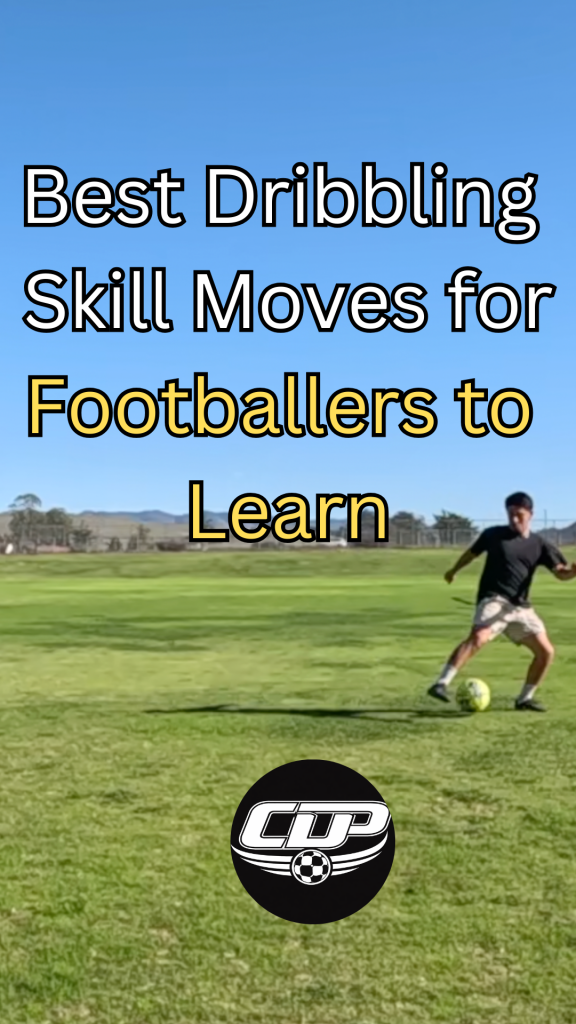
What are the Best Soccer Moves Players Should Learn to Perform?
The Body Feint
In soccer, the most effective moves are sometimes the simplest, like a body feint. To perform a body feint successfully, shift your body weight quickly to one side as if you’re going that way, then quickly push off in the opposite direction with the same foot.
Use your upper body too by dropping your shoulder to deceive the defender, making them think you’re going one way when you’re actually going the other.
The Cruyff Turn
The Cruyff turn is another simple yet effective move popularized by the late Johan Cruyff, one of the best players of all time. To perform this skill move, drag the soccer ball behind your standing foot with the inside of your other foot, then quickly turn and accelerate in the opposite direction.
This move lets players create space and beat defenders expecting them to keep moving in the same direction. It is also important to stay low to lower your center of gravity for better balance and to turn in one continuous motion.
The Scissor Move
The scissor move is a bit more advanced than the other two moves, but it is still effective and fairly simple. To perform the scissors, step over the soccer ball with one foot while moving your body in the opposite direction, then quickly step over the ball with your other foot in the same motion.
This move is great for confusing defenders and creating openings to dribble the ball past them.
The Step Over
The step over is the opposite of the scissor move; to perform it, players fake a move in one direction by stepping over the ball with one foot, then quickly accelerate in the opposite direction. This move is all about timing and tricking the defender into committing to the wrong direction.
The Elastico (Flip Flap)
The elastico, also known as the flip flap, is an incredibly effective skill move to beat a defender, but it is not as easy as it looks. To perform this move successfully, you have to hit the ball with the outside of your foot, then quickly hit it again with the inside of your foot across your body.
This skill move requires quick footwork, good timing to strike the ball properly, and elite ball control. Brazilian icon Ronaldinho popularized and mastered the Elastico.
The Reverse Elastico
The reverse elastico, or reverse flip flap, is exactly what it sounds like: the opposite of a regular elastico. To perform this soccer move, you have to first hit the ball with the inside of your foot and then quickly hit the ball again with the outside of your foot and across your body.
Many players, fans, and coaches consider this move easier than the regular elastico, and they use it in different situations.
The Stop and Go
The stop and go move is a great move to delay and confuse defenders. Like a body feint, the goal is to trick the defender into thinking you are going one direction, stopping, and then going the other.
To perform this move, dribble towards the defender at full speed, then abruptly stop the ball with the sole of your foot and quickly accelerate in the opposite direction. This move is effective for catching defenders flat-footed.
There are different variations of the stop-and-go move, but they all follow the same concepts: slow down, decelerate quickly, and stop before taking off in another direction.
The Ronaldo Chop
The Ronaldo Chop, created by the iconic Cristiano Ronaldo, is similar to a Cruyff turn but slightly different. To perform this move, plant your dominant foot next to the ball and quickly drag it back behind your standing leg, then use the inside of your other foot to push the ball in the opposite direction. This move is great for changing direction quickly and getting past defenders.
The Maradona Turn (Spin Move)
The Maradona Turn is a skill move that requires great technique and was popularized by Argentine legend Diego Maradona. To perform this move, drag the ball behind your standing foot with the sole of your other foot, then quickly spin your body around the ball to shield it from the defender. This move helps you maintain possession and evade pressure.
The Nutmeg
The nutmeg is a simple skill move that refers to kicking the ball through an opponent’s legs and winning it back. You can perform the nutmeg in different ways, but the main goal is to hit the ball through an opponent’s legs and win it back.
If you get the ball through the legs but lose possession right afterward, the nutmeg wasn’t as effective as it could be.
The V Pull
The V pull is an excellent soccer move to keep possession and beat defenders. To perform this move, dribble toward the defender at an angle; once the defender commits, quickly pull the ball back with the sole of your foot, then push it forward in the opposite direction with the outside of the same foot.
This move is great for changing direction and creating space to pass or shoot.
Summary
In conclusion, as a soccer player, no matter what position you play, it is important to have some soccer skill moves in your toolbox. The best way to get better at performing skill moves is by training them consistently with both foot, training barefoot, and of course, by playing against real opponents in live scenarios such as:
- Official games
- Team trainings
- Small sided games (5v5, 7v7, or 9v9)
- Pickup games
- Futsal
- Beach soccer
In this blog, I shared with you 11 of the most basic but effective soccer skill moves to learn and practice.
Frequently Asked Questions
What are soccer tricks called?
Soccer tricks are commonly called skill moves, dribbling moves, or simply “skills” by players and coaches. These terms all refer to the same thing, which are the skill moves on this list.
What are the basic skills of soccer?
The basic skills of soccer include ball control, passing, shooting, dribbling, first touch, and defending – fundamentals that every player must master regardless of their age, level, or position. These core abilities form the foundation for more advanced techniques and tactical play.
How to do a simple cool move in soccer?
The body feint is one of the simplest yet most effective moves – just shift your body weight to one side as if going that direction, then quickly push off in the opposite direction. This basic deception can beat defenders at any level and requires no complex footwork to master.
What gear and equipment do I need to improve my soccer skills?
The best thing about soccer is that you don’t need much equipment or accessories to start playing and improving. All you really need is a soccer ball, but the more seriously you want to play, the more gear you will need, such as soccer cleats, shin guards, grip socks, shorts, and shirts, plus equipment like cones, rebounders, ball pumps, and soccer bags.
