
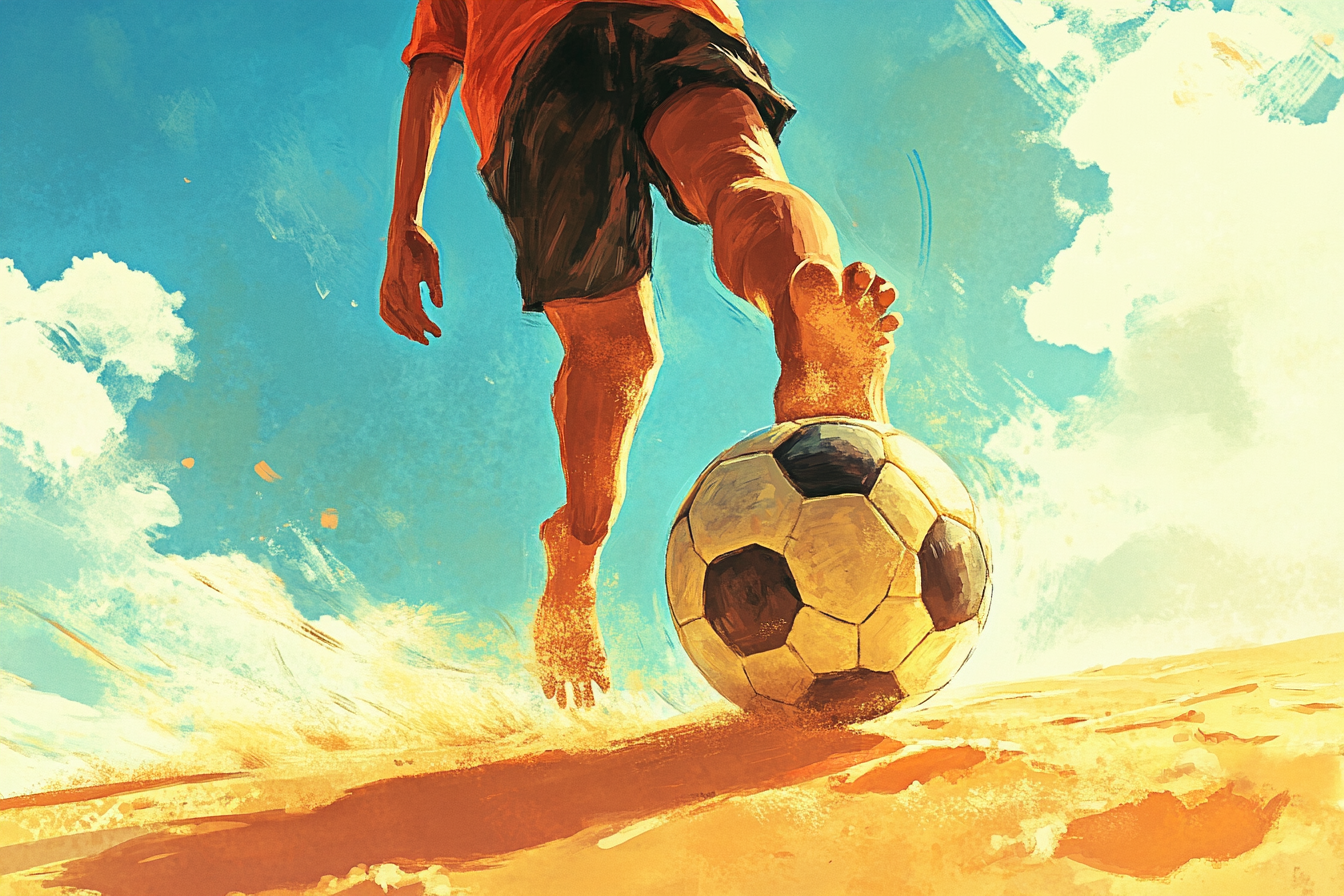

5 Benefits of Barefoot Soccer Training Every Player Should Know
When was the last time you played soccer barefoot? Have you ever kicked a soccer ball without cleats?
Before they became legends, players like Neymar, Cristiano Ronaldo, and Messi first learned how to play the game barefoot. Without fancy cleats or perfect fields, they improved their touch, creativity, and balance in the most natural way possible, with nothing between their feet and the ball.
Barefoot soccer training has been around for centuries, long before the official game of football was created in England in the late 1800s. I’ve been playing soccer for as long as I can remember, and growing up, I didn’t play barefoot as much as I should have.
Part of that is that the USA doesn’t have a strong soccer culture, so you don’t see people doing things like playing barefoot in the streets. Many people see being barefoot as “weird,” and they are unfamiliar with the benefits of barefoot training, which go far beyond becoming a better soccer player. However, consistently training barefoot over a long period will improve every aspect of player development, including talent, game IQ, mindset, athleticism, fitness, recovery, and discipline.
Now that I am an older player and coach others as well, I spend a lot of my time training barefoot and teaching others the benefits of this fun training method that reconnects you to the game in its purest form. If you’re interested in taking your training to the next level with a structured program, you can reach out to me or learn more here.
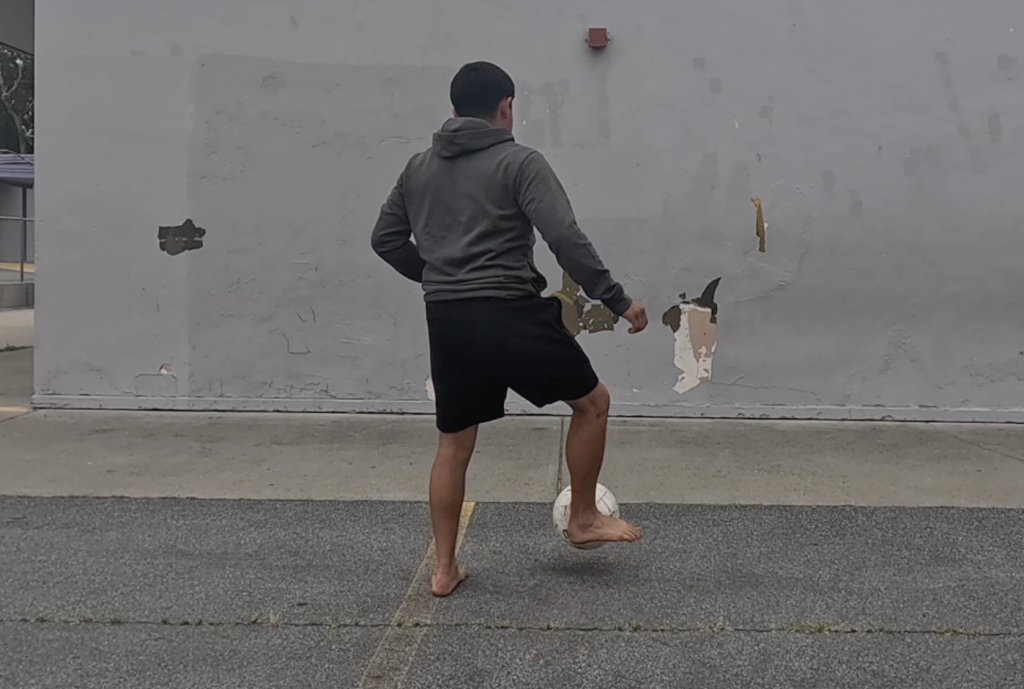
What are the Benefits of Barefoot Soccer Training?
Whether you’re playing soccer on grass, artificial grass, or even sand with friends, alone, or with a team, training barefoot can help you improve the most important skills of the game listed below. However, if you play on artificial turf, you have to be aware of the hidden potential dangers of this playing surface.
- Ball control
- First touch
- Passing
- Dribbling
- Shooting
- Defending
- Developing your weaker foot
- Awareness
- Decision making
- Composure
- Creativity
- Game IQ
Here are five key benefits that explain why ditching your regular cleats for bare feet might be the best decision you make for your soccer development, foot health, and overall health. The one thing to remember about barefoot training is to be smart and check the area you plan to play on for any sharp or potential hazards.
Better Ball Control, Touch, and Skill Development
Playing barefoot soccer removes the padding and cushioning of cleats, giving you a direct connection between your foot and the ball that helps develop a more natural touch and better ball control. The enhanced sensitivity of bare feet lets players feel exactly where they’re making contact with the ball, leading to better passing, shooting, and dribbling that carries over directly to wearing cleats in real games.
Without the restriction of a narrow toe box, your toes can spread naturally and grip the turf or grass, giving you better balance and the ability to use different parts of your foot.
Improved Foot Strength and Mobility
Barefoot training strengthens the small intrinsic muscles in your toes and midfoot, which are often weakened by traditional cleats with too much cushioning and heel support. Walking and playing barefoot soccer can help players develop wider feet, stronger arches, and a reduced risk of plantar fasciitis and other common foot injuries.
As your foot strength improves through barefoot training, transitioning to barefoot shoes or zero-drop minimalist options like the Primus Trail becomes a natural progression that keeps the same benefits while providing protection when needed.
Better Balance and Body Awareness
Your bare feet act as sensory organs that provide direct feedback from the ground, whether you’re playing on soft ground, turf, or harder surfaces, sending crucial proprioceptive information through your fascia system and central nervous system. This enhanced connection improves your ankle stability and balance during any soccer skill while developing what’s called “dorsal vision.”
Dorsal vision is a type of vision and body awareness that helps you maintain a broader perception of your surroundings and react faster without needing to focus your central vision directly on a target.
Natural Injury Prevention and Recovery
Barefoot soccer training teaches the body to move more naturally and use the feet as they were designed, helping you generate and absorb force better and reducing your risk of injury. Playing barefoot on soft ground like grass also provides grounding therapy, which helps reduce inflammation, improve mitochondrial function and sleep quality, and speed recovery between games.
Together, this natural approach to foot health builds resilience, enhances overall well-being, and allows players of all ages to play soccer with more balance, energy, and long-term protection.
Cost-Effective Training Method
Barefoot soccer training is one of the most accessible ways to improve your game, requiring no expensive cleats, special equipment, or fancy facilities. Just find some grass and start playing.
This makes it perfect for kids of all ages and players on any budget, letting you develop your skills with friends anywhere without worrying about lots of training gear and accessories. Of course, the more equipment you have available, such as a soccer goal, cones, a rebounder, or a wall, the more fun and creative your barefoot training sessions can become, but all you really need is a ball, your bare feet, and some open space to improve your skills.
Final Thoughts
Barefoot soccer training isn’t just a fun way to reconnect with the game; it’s a powerful tool that can transform your foot health, ball control, and overall soccer development for players of all ages and positions. Whether you’re training on grass, sand, or turf, spending time barefoot will strengthen your body naturally while developing skills that traditional cleats can’t provide.
Start small by playing barefoot with friends in your backyard, and gradually increase your sessions as your feet adapt and grow stronger.
FAQ
How do you take care of your feet for football?
- Daily barefoot walks – 10+ minutes on grass or soft ground •
- Barefoot soccer training – 10+ minutes daily for foot strength
- Wear toe spacers – 10+ minutes daily to prevent narrow toe box damage.
- Choose wide leather cleats – Avoid narrow-toe-box shoes that compress your feet.
- Use a spiky ball massage – Roll plantar fascia and calves 3-5 minutes daily.
- Take care of your soles – Use a high-quality pair of soccer insoles.
- Transition to barefoot shoes – Zero drop options like New Balance Minimus or Xero Shoes
Is there a barefoot cleat model for soccer players?
While there isn’t a true “barefoot cleat” that provides the same benefits as training barefoot, some soccer cleats offer more natural foot positioning than traditional options. Wide, soft leather cleats like the Copa Mundial let your feet spread more naturally than narrow-toe-box synthetic models, though they don’t qualify as barefoot cleats.
For the closest experience to barefoot soccer while wearing shoes, look for minimalist cleats with a zero-drop design, wide toe boxes, and minimal cushioning that let your toes and midfoot function more naturally on grass or turf. There is a brand called Natur Athletics that makes a barefoot cleat, but I haven’t tried it yet.
Off the field, there are many options for barefoot and minimalist shoes that I recommend for any soccer player, such as Xero shoes.
What gear and equipment do I need to improve my soccer skills?
The best thing about soccer is that you don’t need much equipment or accessories to start playing and improving. All you really need is a soccer ball, but the more seriously you want to play, the more gear you will need, such as soccer cleats, shin guards, socks, shorts, and equipment like cones, rebounders, ball pumps, soccer bags, etc.
