

9 Best Soccer Passing Drills to Improve Accuracy and Range
A pass in soccer is like having a conversation with your teammate, it’s not just about what you say, but how you say it, when you say it, and whether the other person can actually understand the message. Most players never learn to speak this language of passing the ball fluently, but using these nine drills consistently, as well as improving your overall talent, passion, discipline, game IQ, mindset, athleticism, fitness, and recovery, can change all of that.
Passing a soccer ball is one of the most important skills of the game along with ball control, first touch, dribbling, shooting, defending, decision making, composure, awareness, and creativity that all players must work on improving no matter their position or playing level. When it comes to training there is no drill that is going to replicate the real game which means that the best way to improve all of your skills, not just passing, is by playing and training against real opponents through team trainings, small-sided games, or pickup games.
Once you are training consistently with other players, you can supplement your training with extra individual training sessions, and include some of the following drills to improve your passing. Throughout my years of playing, coaching, and running sports league I’ve seen first hand how the right passing drills can completely change the way a players passes the ball over different distances and heights.
That is why in this blog post I will be going over the best soccer passing drills to help players improve this fundamental skill. To perform the drills on this list in the most efficient way, it will be important to have some of the following training equipment, and accessories, such as:
- Rebounder – To have a training partner that doesn’t get tired
- Soccer balls – Have a few to spend less time shagging balls
- Soccer ball bags – Easy way to carry your soccer balls
- Soccer Cleats – Wear the right cleats based on your playing surface
- Portable soccer goal – Important to work on scoring goals
What are the best Soccer Passing Drills for Individual and Group Training?
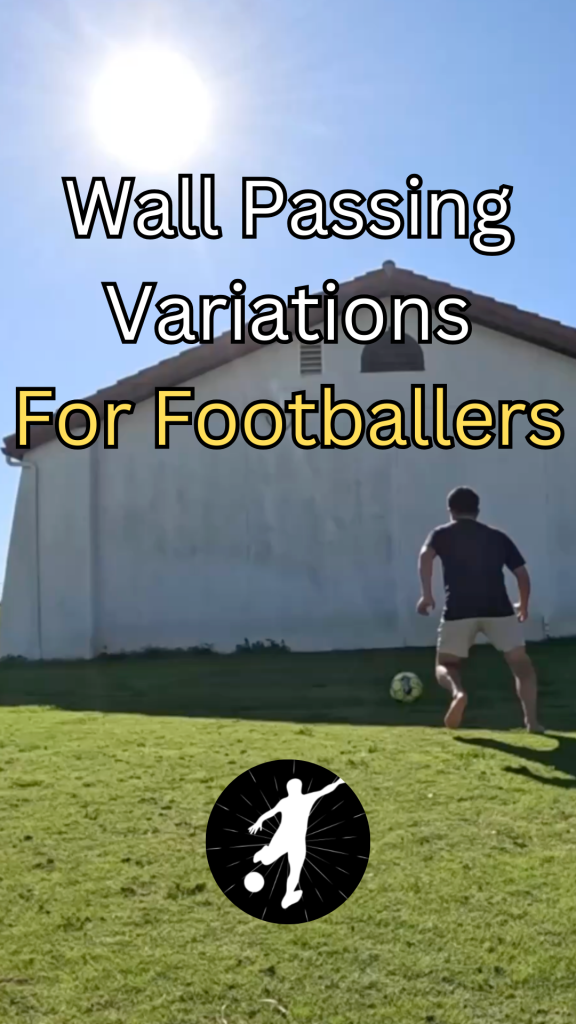
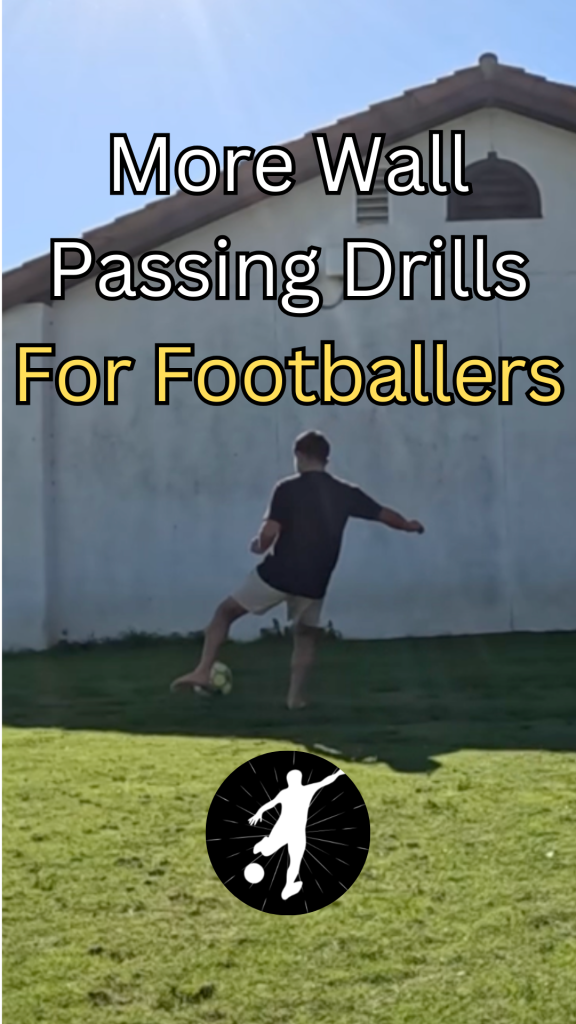
While training with partners remains the gold standard for developing passing skills since you can work on various techniques and ball control from different angles, solo training with a wall or rebounder are great options when partners aren’t available. Depending on your training set setup—high walls for aerial passes or shorter walls for ground work—you can practice freestyle passing, timed technical sessions, or combine passing with turning and shooting drills to make it more game realistic.
Think of the wall as your training partner that never gets tired but remember to challenge yourself with different speeds, techniques, and high intensity to maximize every solo session. Also consider training barefoot at least once or twice a week to build stronger feet and improve your natural feel for the ball, which will translate to better control when you put your cleats back on.
One-touch / two-touch passing
Setup: Partner up with another player and stand about 10 yards apart. You can mark this distance with cones or just eyeball it.
One-Touch Drill: Pass the ball back and forth using only one touch. The goal is to improve the speed and accuracy of your passes over time and to focus on making clean passes consistently
Two-Touch Drill: Similar to the one-touch drill, but now you’re allowed two touches: one to control the ball and the second to pass it back.
Progression: Step back and get further away from each other. Focus on hitting the ball hard, but accurately, so that it challenges your opponent, but it’s manageable.
One Touch / Two Touch Passing with Grid
Setup: Partner up with another player and stand about 10 yards apart. Create a square grid using cones each player stands in their grid.
One-Touch Drill: Pass the ball to your partner using one touch and make sure it goes straight into their grid. Your partner will then do a one touch pass back to you.
Two-Touch Drill: Same as above, but now with two touches allowed. Make sure the ball does not leave your grid after your first touch and make sure it enters your opponent’s grid once you make the pass.
Progression: Step back and get further away from each other, make the grids smaller, or make harder passes
Two touch juggling
Setup: Stand a few yards apart from your partner.
Drill: Juggling the ball, pass the ball back and forth using two touches: one to control the ball and the second to pass it. The goal is to keep the ball in the air without dropping out and getting better at passing and receiving from the air.
Progression: As you improve, play with the height of the juggles and how far you are from each other.
Long Pass Drill (Passing or juggling)
Setup: Partners stand about 30-40 yards apart from each other.
Drill: Pass the ball back and forth using long passes. Focus on using the instep for accuracy and power, aiming to deliver the ball to your partner’s feet or chest.
Progression: As you become more accurate, increase the distance between you and your partner or add a grid, similar to the two touch passing grid drill, but obviously further apart.
Crossing to Finishing Drill
Set up: One player stands on the wing (either left or right), and the other in the penalty box.
Drill: The wing player crosses the ball into the box, and the partner attempts to finish by shooting on goal with either one or two touches. Alternate roles after a couple of minutes or shot at goal
Progression: Get further away from your partner, further away from the goal, receive some balls in the air and some on the ground, or limit your number of touches.

Rondo
Setup: Form a circle with 4-6 players, with one or two players in the middle (defenders).
Drill: Players on the outside pass the ball to each other, while the defenders try to intercept it. The goal is to keep the ball away from the defenders with quick, precise passes sort of like money in the middle.
Progression: Increase the number of defenders or reduce the size of the circle to make it more challenging.
Square Drill
Setup: With four players, create a square using cones, about 10 yards per side and with a player positioned at each cone.
Drills: Players pass the ball around the square, either clockwise or counterclockwise. Focus on not staying on the cone and checking out and calling for the ball.
Progression: Use two touches (one to control, one to pass), then progress to one-touch passing or add a second ball.
Triangle Drill
Setup: With three players, set up three cones in a triangle formation and position a player at each cone.
Drill: Players pass the ball around the triangle, either clockwise or counterclockwise. Focus on not staying on the cone and checking out and calling for the ball.
Progression: Use two touches (one to control, one to pass), then progress to one-touch passing or add a second ball.
Y Drill
Setup: Arrange cones in a Y shape. Place a player at each cone.
Drill: The player at the bottom of the Y passes the ball to one of the players at the top, who then lays it off to the other player. That player then passes it back down to the starting point.
Progression: Use two touches (one to control, one to pass), then progress to one-touch passing or add a second ball.
Diamond Drill
Setup: Create a diamond shape using cones, with a player at each cone.
Drills: Players pass the ball around the diamond, focusing on precise, well-timed passes. Rotate positions regularly.
Progression: Use two touches (one to control, one to pass), then progress to one-touch passing or add a second ball.
Final Thoughts
Remember, these drills are tools to build muscle / fascia memory and confidence, but the real test comes when you step onto the field with 21 other players moving at full speed. The main difference between a good passer and a great one isn’t just their technical ability but it’s more about having the mental composure to make the right decision under pressure and execute it perfectly when it matters the most.
Start with the basics, progress gradually, and always train with the same intensity you’d bring to a match. Most importantly, be patient with yourself; mastering the art of passing takes time, but every accurate pass in training brings you one step closer to becoming a better overall player.
FAQs
How can I improve my passing accuracy if I don’t have a partner?
If you don’t have a training partner, teammates or friends then the most important thing you can do is find some. Training with others is by far the best way to improve, but if you currently don’t have a training partner then you can use a wall or a rebounder to improve your passing.
What are the best individual soccer drills for young players?
The best ways for younger players to improve at soccer are by being in a team environment and playing against higher-level opponents, not just by doing individual training sessions. By being in a team environment, players will get to play real matches, train against live opponents, as well as get feedback from their coach.
If you have to do an individual training session, it is best to focus on keeping it simple yet intense, meaning you work on the fundamentals of the game while maintaining full intensity and mindfulness.
What gear and equipment are needed to improve my soccer skills?
The best thing about soccer is that you don’t need a lot of training gear to start playing and improving. All you really need is a soccer ball, but the more serious you want to play, the more gear you will need, such as soccer cleats, shin guards, grip socks, shorts, shirts, cones, rebounders, ball pumps, soccer bags, etc.
