

How to Dribble a Soccer Ball: 7 Tips to Improve Fast
Dribbling is one of the most fundamental soccer skills, regardless of level or position, because it lets players move around the field with the ball at their feet. Whenever you control or receive a soccer ball, you usually have two options: dribble or pass/shoot, and the players who stand out are the ones who can do both confidently.
Dribbling is one skill you can improve alone much more easily than others because all you need is a ball, open space, some cones, and your imagination. In this post, I’ll cover 7 tips for dribbling a soccer ball as a beginner, so you can build a stronger technical foundation and develop the kind of dribbling ability that translates directly into real game situations.
If you’re ready to take your training to the next level with a structured program, reach out to me or learn more here.
How do you dribble a soccer ball?
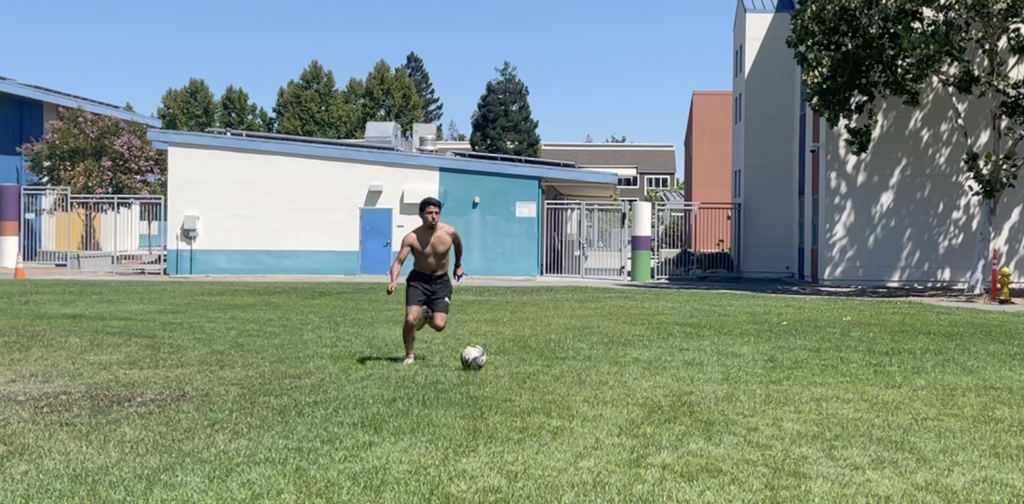
Dribbling a soccer ball effectively comes down to developing the right technical habits and practicing them consistently. It is one of the many fundamental skills every player needs to master alongside ball control, first touch, passing, shooting, defending, awareness, decision-making, composure, and creativity. All of these skills develop faster when you are also consistently working on the key pillars of player development: talent, game IQ, mindset, athleticism, fitness, recovery, and discipline, because becoming a complete player requires improving all of these areas together, not just one skill at a time.
Spend Time Playing the Game
The best way to improve at dribbling is to spend as much time with the ball as possible, because you learn by taking action and staying consistent over time. Practice dribbling in open space, then add cones; do specific cone patterns, practice skill moves, freestyle dribble with maximal intent, and, of course, play different variations of the game against live opponents.
The best dribblers in the world developed their skills by playing the game as much as possible throughout their developmental childhood years to improve their muscle and fascia memory.
Improve Your Body Control
Effective dribbling starts with your body mechanics because your stance, rhythm, and body control directly determine how quickly and comfortably you can move with the ball under pressure. To improve your body mechanics, do fascia training throughout the week that focuses on balance, coordination, footwork, rhythm, and staying light on your feet.
It is also important to understand how to apply fascial tension throughout the body to improve coordination and balance with strength, by focusing on tension in the feet, hands, and tongue.
Stay Low with a Bent Knee and Good Center of Gravity
Keeping your knees bent and staying low to the ground gives you better balance, faster cuts, and the ability to change direction more explosively than a defender who is standing upright. The lower your center of gravity, the harder you are to knock off the ball and the easier it becomes to protect the ball with your body while dribbling.
Stay slightly crouched, with your weight on the balls of your feet and your hips ready to shift quickly, so you can adjust to pressure without losing control of the ball.
Keep the Ball Close to Your Feet and Change Directions
The best dribblers keep the ball close to their feet because the tighter your control, the later a defender has to commit; the later they commit, the easier it is to exploit the moment they are off balance. That said, there are no absolutes in soccer, and sometimes you’ll need to take bigger touches to beat opponents.
When dribbling, it is also important to change direction frequently and make constant feints to keep defenders off balance.
Use Both Feet
Being able to dribble with both feet gives you more options in any direction, making you harder to defend against because you are not always forced to set the ball up with your dominant foot. Start by practicing all your dribbling drills equally with both feet, and over time you will develop the two-footed comfort that makes you a more unpredictable and dangerous player on the ball.
Use Different Parts of Your Foot
Being able to manipulate the ball with the inside, outside, sole, laces, heel, and toes lets you change direction at any moment without telegraphing your next move to the defender. Practice using all surfaces of your foot in your individual training sessions, because the more naturally each surface feels, the more creative and unpredictable you will become with the ball.
Keep Your Head Up
Keeping your head up while dribbling lets you read the game, spot your teammates, and make the right decision at the right moment, because a player who only looks at the ball while dribbling gives away their next move and misses opportunities around them. Develop the habit of scanning the field every few seconds while dribbling so that by the time you beat a defender, you already know exactly where the ball needs to go next.
Final Thoughts
Developing your dribbling as a beginner comes down to consistently building the right technical habits and spending quality time with the ball in every session. Focus on keeping the ball close, staying low, using both feet, and changing speed and direction with purpose, because those habits will make the biggest difference in how effective and confident you become on the ball in real game situations.
Remember, dribbling isn’t about being flashy or trying to do too much; it is about making defenders guess and putting yourself in positions to create opportunities for yourself and your teammates. That comes from consistent, purposeful practice over time.
Frequently Asked Questions
What is the best way to stay consistent with mindset training in soccer?
The best way to stay consistent with mindset training in soccer is to build simple habits like journaling, visualization, and positive self-talk. Players can also use tools such as a soccer training journal, a performance tracker, a mental training book, and other mental training resources to help make their mindset work more structured, consistent, and measurable.
What gear and equipment do I need to improve my soccer skills?
The best thing about soccer is that you don’t need much equipment or accessories to start playing and improving. All you really need is a soccer ball, but the more seriously you want to play, the more gear you will need, such as soccer cleats, shin guards, grip socks, shorts, and shirts, plus equipment like cones, rebounders, ball pumps, soccer bags, etc.
